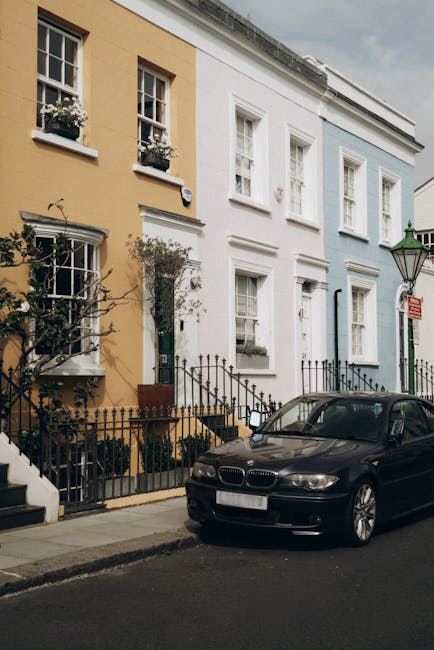
Portobello Road gardeners guide for tiny Notting Hill gardens
If you live near Portobello Road, you already know the charm of Notting Hill: handsome terraces, tucked-away courtyards, railings, narrow side returns, and those little gardens that seem to do a surprising amount with very little space. That is exactly why this Portobello Road gardeners guide for tiny Notting Hill gardens exists. Small gardens here are not a limitation so much as a design puzzle, and a good one at that.
The trick is not to force a country garden into a postage-stamp plot. It is to work with the light, the access, the walls, the pots, and the way people actually use the space. In a tiny London garden, every decision matters. A plant in the wrong place can block the view. A deep border can steal all the room. A clever climber, on the other hand, can change the whole feel of the place by next Thursday, or at least by the next decent watering.
This guide walks through what matters, how to plan it, what works best in compact Notting Hill gardens, and where people often go wrong. You will also find practical comparisons, a step-by-step method, and a checklist you can use before you spend money or dig up a single square foot. If you are comparing help from local professionals, it can also be useful to review a broader gardening services overview or a more focused garden maintenance guide to understand what kind of support you actually need.
Table of Contents
- Why Portobello Road gardeners guide for tiny Notting Hill gardens Matters
- How Portobello Road gardeners guide for tiny Notting Hill gardens Works
- Key Benefits and Practical Advantages
- Who This Is For and When It Makes Sense
- Step-by-Step Guidance
- Expert Tips for Better Results
- Common Mistakes to Avoid
- Tools, Resources and Recommendations
- Law, Compliance, Standards, or Best Practice
- Options, Methods, or Comparison Table
- Case Study or Real-World Example
- Practical Checklist
- Conclusion
- Frequently Asked Questions
Why Portobello Road gardeners guide for tiny Notting Hill gardens Matters
Tiny gardens in Notting Hill have a particular set of pressures. They may be overlooked by neighbours, shaded by surrounding buildings, exposed to reflected heat from brick and paving, or awkwardly shaped because of side access, bin storage, or basement steps. Some are little more than an outdoor corridor. Others are romantic, but fragmented. You can have all the style in the world and still feel stumped by six square metres of outdoor space.
That is where a local, practical approach matters. A garden design that works in a suburban back plot can fall apart in a Portobello Road setting because the conditions are just different. Light levels change quickly between front and rear, and the best solution is often about layering, height, and proportion rather than trying to cram in more planting. In a compact setting, the garden needs to earn its keep.
There is also the lifestyle side. In this part of London, outdoor space often doubles as somewhere to drink coffee, grow herbs, dry laundry, entertain friends, or sit quietly in the evening when the street finally calms down. A tiny garden should not feel like a leftover. It should feel considered. Even a modest planting plan can transform the everyday experience of opening the back door.
For homeowners, renters with permission, and landlords wanting to improve lettability, the benefits are real. Better planting can soften hard boundaries, screen unsightly views, improve privacy, and make the space feel larger than it is. And if you are preparing for a sale or simply want the place to feel more polished, the right planting structure often gives the best return for relatively little disruption.
Expert summary: In tiny Notting Hill gardens, success usually comes from simplifying the layout, using vertical space, choosing resilient plants, and making every inch do two jobs at once. That is the whole game, really.
How Portobello Road gardeners guide for tiny Notting Hill gardens Works
The process is straightforward in theory and a bit more nuanced in practice. First, you look at the space honestly. Then you decide what the garden needs to do. After that, you choose structure before decoration. People often do this the other way round, which is why they end up with four ornamental grasses and nowhere to sit. Lovely grasses, though.
A practical tiny-garden plan usually follows these stages:
- Measure the usable area rather than the whole visible area. In small gardens, access routes, steps, storage, and utility covers matter more than you might think.
- Map the light across the day. Morning sun, afternoon shade, and wall heat all affect what will thrive.
- Define the main purpose. Is it for entertaining, privacy, herbs, pets, relaxation, or all of those in a limited way?
- Set a simple structure using pots, raised planters, climbers, or a narrow border arrangement.
- Choose plants for conditions first, then for style.
- Build in access for watering and maintenance. If you cannot comfortably reach it, you will stop caring for it. It happens.
The best tiny gardens also think in layers. Ground level, eye level, and vertical level each need a role. A climber on a trellis, a mid-height shrub in a pot, and a low herb edging can work together to make the space feel fuller without making it feel crowded. That sort of balance is often what a good landscaping plan brings to a very small garden.
In Notting Hill, where boundaries can be tight and neighbours close by, another part of the process is considering privacy and sightlines. You do not need a tall fence walling off the whole plot. Sometimes one well-placed screen, a loose hedge in a planter, or a climber with seasonal interest is enough. The goal is softness, not fortress mode.
Key Benefits and Practical Advantages
Done well, a tiny garden gives back more than people expect. It can make a home feel calmer, more usable, and more valuable in everyday terms. Not every benefit is dramatic. Some are the small ones, and those matter just as much.
- More usable space: A clear layout reduces clutter and makes the garden easier to enjoy.
- Better sense of scale: Vertical planting and proportioned containers can make compact spaces feel larger.
- Improved privacy: Strategic planting can soften overlooking from above or from neighbouring properties.
- Lower maintenance burden: The right plant palette reduces constant replacement and guesswork.
- Seasonal interest: A small garden can still look alive in winter, spring, summer, and autumn.
- Stronger property appeal: A tidy, well-planned outdoor room often feels like a genuine asset rather than an afterthought.
There is a quieter benefit too: emotional ease. A neat, planted courtyard after a long day on Portobello Road feels different from a random mix of pots and tired paving. You notice it when you step outside with a mug of tea in the evening. The space can lower the volume of the day. That is not marketing fluff; it is just how good small gardens tend to work.
Another advantage is flexibility. If you rent, you can often create impact with non-permanent solutions like large containers, mobile planters, and freestanding screens. If you own, you can go further with built-in seating, bespoke trellis, or improved drainage. Either way, compact gardens reward careful thinking more than big budgets.
Who This Is For and When It Makes Sense
This guide is for anyone dealing with a small outdoor space in or around Portobello Road and Notting Hill, especially if the garden feels too narrow, too shaded, too exposed, or just a bit awkward. It is also for people who want the space to look good without turning it into a full-time maintenance job.
It makes sense if you are:
- a homeowner wanting a more elegant outdoor room
- a landlord improving presentation between tenancies
- a renter with permission to refresh pots, planters, and surfaces
- someone preparing for a sale and wanting better kerb appeal or rear-garden impact
- a busy household that needs low-fuss planting rather than a high-drama show garden
It is also relevant if you have tried to garden the space before and felt like the garden was winning. You know the type: one plant sulks, another takes over, and suddenly the whole thing looks like a neglected balcony after a rainy bank holiday. A sensible plan resets that.
If the space has tricky access, a basement outlook, or a heavily shaded aspect, it becomes even more important to get advice suited to the conditions. In those cases, browsing a garden FAQ resource can help you prepare better questions before speaking with a professional. And if you are aiming for a really polished finish, a local landscaping service may be the natural next step.
Step-by-Step Guidance
Here is the practical sequence that usually gives the best results in tiny Notting Hill gardens. Keep it simple. Overcomplicating a small space is a fast way to make it feel even smaller.
1. Start with a clean reading of the space
Stand at the doorway and look out. What do you actually see first? Bin storage, fence panels, a bare wall, a lovely brick edge, a patch of mossy paving? Make a note of the good bits and the awkward ones. In very small gardens, the first view matters a lot.
2. Decide on one main use
Will the garden be mostly for sitting, growing, screening, or moving through? It can do more than one job, of course, but it helps to assign a lead role. A garden that tries to be an all-purpose showpiece and a dining room and a herb farm can quickly feel cramped.
3. Choose a structural backbone
Think in terms of the big shapes first. That might mean a slim bench, a pair of statement pots, a trellis with climbing jasmine, or a narrow run of raised planters. Structure gives a small garden bones. Without it, everything floats around looking provisional.
4. Fix the planting conditions before choosing plants
Shade, wind, reflected heat, and dry soil all matter. If you choose plants for looks alone, you will spend more time replacing them than enjoying them. Shade-loving ferns and hellebores, for example, suit different spots from sun-hungry lavender or salvias. It sounds obvious, but honestly, this is where a lot of small gardens go sideways.
5. Build vertical interest
Use walls, fences, railings, and frames. Climbers, hanging planters, wall-mounted pockets, and trellises are especially useful where floor space is tight. Vertical planting draws the eye up, which helps the garden feel taller and less boxed in.
6. Keep the planting palette disciplined
Use a few strong plants repeatedly instead of scattering too many varieties. Repetition calms a small garden and makes it look intentional. Three good plants used well usually beat eleven random ones. Every time.
7. Plan maintenance from day one
If watering access is awkward, choose drought-tolerant plants and self-watering pots where appropriate. If you know you will not prune monthly, avoid plants that demand it. A tiny garden should fit your life, not the other way round.
Expert Tips for Better Results
Some of the best improvements in compact gardens are small, but they make the whole space feel calmer and smarter. These are the kind of adjustments local gardeners tend to make after seeing a few Notting Hill gardens up close.
- Use a limited colour palette. Whites, greens, soft pinks, and deep blues often work beautifully in London courtyards. Too many colours can make a small space feel busy.
- Mix texture, not chaos. Pair glossy leaves with softer foliage or structural planting with finer shapes. Texture does a lot of visual work.
- Keep pots in proportion. Tiny pots can look fiddly. In a small garden, a few properly sized containers are usually better than lots of little ones.
- Leave breathing room. Empty space is not wasted space. It helps the eye rest and makes key plants stand out.
- Use scent where it will be noticed. Jasmine near a sitting spot, herbs beside the door, or fragrant geraniums near a path can lift the whole experience.
A small human truth: sometimes the most effective change is not adding more, but taking one thing away. That extra chair nobody uses, the tired planter at the corner, the overgrown shrub blocking the light. Remove the clutter and suddenly the garden starts to look expensive. Funny how that works.
For ongoing upkeep, a regular garden tidy-up service can be worth considering, especially if your schedule is already full. A little routine care prevents the classic small-garden slump where everything looks nearly fine... until it very much does not.
Common Mistakes to Avoid
Small gardens are unforgiving in a few specific ways. A mistake that would be minor in a larger plot can dominate a tiny one. So it pays to be a bit strict.
- Overplanting: Too many species, too many pots, too many forms. The space loses clarity.
- Ignoring light: A shady yard needs a different plant strategy from a suntrap. Guessing is expensive.
- Choosing fast growers without a plan: They look great for a minute, then crowd everything out.
- Using undersized containers: Small pots dry out quickly and often look underwhelming.
- Forgetting maintenance access: If you cannot reach the back of a border or pot, it becomes a dead zone.
- Making everything match too perfectly: That showroom look can feel stiff. Small gardens often need a little looseness.
One of the most common missteps is treating a tiny garden like a decorating project rather than a living system. Plants grow. Water drains. Shade moves. Moss appears. Wind sneaks in. Tiny spaces need a bit of humility, truth be told.
Another mistake is hard landscaping without enough softness. A courtyard with only paving and a couple of pots can feel more like a fire escape than a garden. Even a little layered planting can change the mood completely. If you are unsure about layout or surface choices, a broader fencing and screening resource can help you think through privacy, boundaries, and how much enclosure actually helps.
Tools, Resources and Recommendations
You do not need an enormous kit to manage a small garden well, but a few tools and materials make life easier. The goal is convenience and consistency, not gadget overload.
Useful tools
- lightweight pruning shears for regular shaping
- a long-handled watering can or hose attachment for awkward corners
- a hand trowel and transplanter for container work
- gloves with decent grip for pruning and repotting
- a small rake or hand fork for tight borders and planters
Helpful materials
- good-quality compost suited to the plant type
- mulch to reduce drying out and tidy the finish
- slow-release feed for containers, if appropriate
- supports, ties, and trellis for climbing plants
- self-watering inserts for certain pots where watering is a problem
When choosing plants, think in terms of reliability rather than novelty. Structure plants, evergreen screens, compact shrubs, herbs, and well-behaved climbers are often the backbone of a successful tiny Notting Hill garden. If you are looking to understand the broader service menu behind the planting work, a tree surgery guide may also be relevant where mature trees affect light or access in nearby gardens.
A final recommendation: keep a simple garden note on your phone. Jot down what thrives in each corner, what dries out first, and what you never quite manage to reach. That tiny record becomes very useful over a season. Not glamorous, but it works.
Law, Compliance, Standards, or Best Practice
For most small residential gardens, the biggest compliance concerns are practical rather than legal: neighbour boundaries, access, water run-off, and safe use of tools or materials. If work involves shared walls, fences, retaining features, or anything that might affect adjoining properties, it is sensible to check ownership and seek agreement before making changes. In London, that is just good manners as much as anything else.
Where tree work is involved, additional care may be needed. Some trees are protected, and local rules can apply depending on location and status. If a garden includes a mature tree or significant branch overhang, professional advice is worth getting before pruning or removal. Likewise, if you are working near services, drains, or basement light wells, do not assume the layout is simple just because the garden looks simple.
Good practice also includes using appropriate safety measures with tools, making sure climbing plants are supported properly, and choosing materials that will not create trip hazards in narrow passages. In small gardens, a loose paving stone can be more than an annoyance; it can be the one thing everyone notices.
For landlords or anyone improving a property for lettings, keeping the garden tidy, safe, and accessible is usually the sensible baseline. It does not need to be elaborate. It needs to be sound, attractive, and realistic to maintain. That is often the real standard, even if people rarely say it out loud.
Options, Methods, or Comparison Table
If you are deciding how to improve a tiny Notting Hill garden, the right method depends on space, budget, and how hands-on you want to be. Here is a simple comparison of common approaches.
| Method | Best for | Pros | Watch-outs |
|---|---|---|---|
| Container-led design | Renters, patios, awkward layouts | Flexible, movable, easy to refresh | Needs regular watering and feeding |
| Raised planters | Narrow plots, poor soil, access issues | Better control of soil and structure | Can reduce floor area if overused |
| Vertical planting | Very small courtyards and side returns | Maximises impact without taking floor space | Needs secure fixing and upkeep |
| Minimalist planting scheme | Busy households, low-maintenance goals | Clean, calm, easier to manage | Can feel sparse if underdesigned |
| Full redesign | Long-term homeowners, severe layout problems | Best chance to solve deep issues | More cost, more planning, more disruption |
In practice, many tiny gardens use a blend of these. A courtyard might rely on container planting for flexibility, a narrow wall trellis for vertical lift, and one fixed seating area for usability. That mix tends to be more forgiving than trying to commit to a single hard-line style.
Case Study or Real-World Example
Imagine a compact rear garden off Portobello Road: around five metres long, narrow, with patchy shade in the morning and stronger light later in the day. It has old paving, a plain boundary wall, and a single seating area that feels squeezed into the middle. Nothing is broken, but nothing really sings either.
The first move is to clear clutter and define zones. A slim bench goes against the sunniest wall. One raised planter is used to give height near the back. A climbing evergreen is trained up a trellis to soften the boundary, and a second planter holds herbs near the door so they are actually easy to use. The plant palette stays tight: maybe three or four core varieties, repeated rather than scattered.
The result is not a dramatic "before and after" fantasy. It is more modest than that, and more useful. The garden feels calmer on day one, then better again once the climbing plants settle in. By the end of the season, the walls are softer, the seating spot feels intentional, and the whole space reads as a little outdoor room rather than a leftover strip of paving.
That kind of transformation is realistic for many Notting Hill gardens. You do not need a massive budget. You need the right sequence, decent planting choices, and a steady hand. And sometimes, a bit of patience. Plants do not read the plan, unfortunately.
Practical Checklist
Use this before you start any work in a tiny Portobello Road or Notting Hill garden.
- Measure the usable space, not just the total footprint
- Note where sun, shade, and wind fall during the day
- Decide the garden's main purpose
- Choose a simple structure before buying plants
- Pick plants suited to the actual conditions
- Use repeated shapes and limited colours for calmness
- Check how you will water every pot and border
- Leave enough room to walk, sit, and maintain the space
- Review privacy needs from neighbouring windows and upper floors
- Confirm whether any boundary, tree, or shared-wall issues need attention
- Keep maintenance realistic for your schedule
- Plan for seasonal refreshes rather than a one-off fix
If you can tick off most of that list, you are already ahead of the game. If not, no drama. Better to pause than rush in and regret the layout six weeks later.
Conclusion
A tiny Notting Hill garden can be one of the most rewarding spaces to improve because the gains are immediate and very visible. The right planting, the right structure, and a little discipline around scale can turn a cramped patch into a genuinely lovely outdoor room. The best Portobello Road gardeners guide for tiny Notting Hill gardens is not really about squeezing more in; it is about making the space feel calmer, smarter, and more liveable.
If you remember only one thing, let it be this: start with the conditions, then the function, then the style. That order saves time, money, and a fair bit of gardening grief. Whether your space is a shaded courtyard, a narrow rear strip, or a courtyard with a view of a brick wall that has seen better days, it can still become something special.
Get a free quote today and see how much you can save.
And if you take one small step this week, make it the first one. Even a tiny garden can feel generous when it is planned with care.
Frequently Asked Questions
What is the best planting style for tiny Notting Hill gardens?
The best style is usually simple, layered, and condition-led. Think a restrained palette, repeated plants, vertical interest, and containers that suit the scale of the space rather than competing with it.
How do I make a small Portobello Road garden look bigger?
Use fewer materials, repeat plant forms, keep pathways clear, and draw the eye upward with climbers or taller focal points. A tidy layout often creates more visual space than adding more plants.
Are pots better than borders in very small gardens?
Often, yes, especially if the garden has awkward access or changing use over time. Pots offer flexibility, but they do need more regular watering and maintenance than fixed borders.
Which plants work well in shaded Notting Hill gardens?
Shade-tolerant planting often includes ferns, hellebores, ivy used carefully, some hydrangeas, hostas where slugs are manageable, and certain evergreen shrubs. The exact choice depends on how deep the shade is and whether the area gets reflected light.
Can I have privacy in a tiny garden without making it feel enclosed?
Yes. Partial screening, climbing plants, and layered planting can soften views without boxing the garden in. Full-height barriers are not always the answer.
How much maintenance does a tiny garden need?
That depends on the planting style. A container-heavy garden may need regular watering, while a more settled border with resilient shrubs can be lower effort. The best plan is one you will actually maintain.
What should I do first if my small garden feels cluttered?
Clear the non-essentials first. Remove broken pots, excess furniture, and any plants that are crowding the space. Then reassess the layout before adding anything new.
Is professional help worth it for a very small garden?
Often, yes. Small spaces benefit from precise planning, and a skilled gardener or landscaper can usually spot opportunities and problems much faster than trial and error.
Do I need permission for garden changes in Notting Hill?
Simple planting and basic maintenance usually do not require permission, but shared boundaries, trees, retaining structures, and anything affecting neighbouring property can raise separate considerations. If in doubt, check before making changes.
What is the most common mistake people make with tiny London gardens?
Overfilling the space. Too many plants, too many pots, and too many design ideas can make a small garden feel even smaller. Restraint usually gives a better result.
How can I keep a tiny garden looking good all year?
Use evergreen structure, a mix of seasonal interest, and a few reliable plants that hold shape in winter. Then add bulbs or summer planting for bursts of colour rather than relying on one season alone.
Where should I start if I want to improve my garden this month?
Start with a measurement, a light check, and a quick list of what the garden must do. Once that is clear, it becomes much easier to choose the right planting and layout without wasting money.